
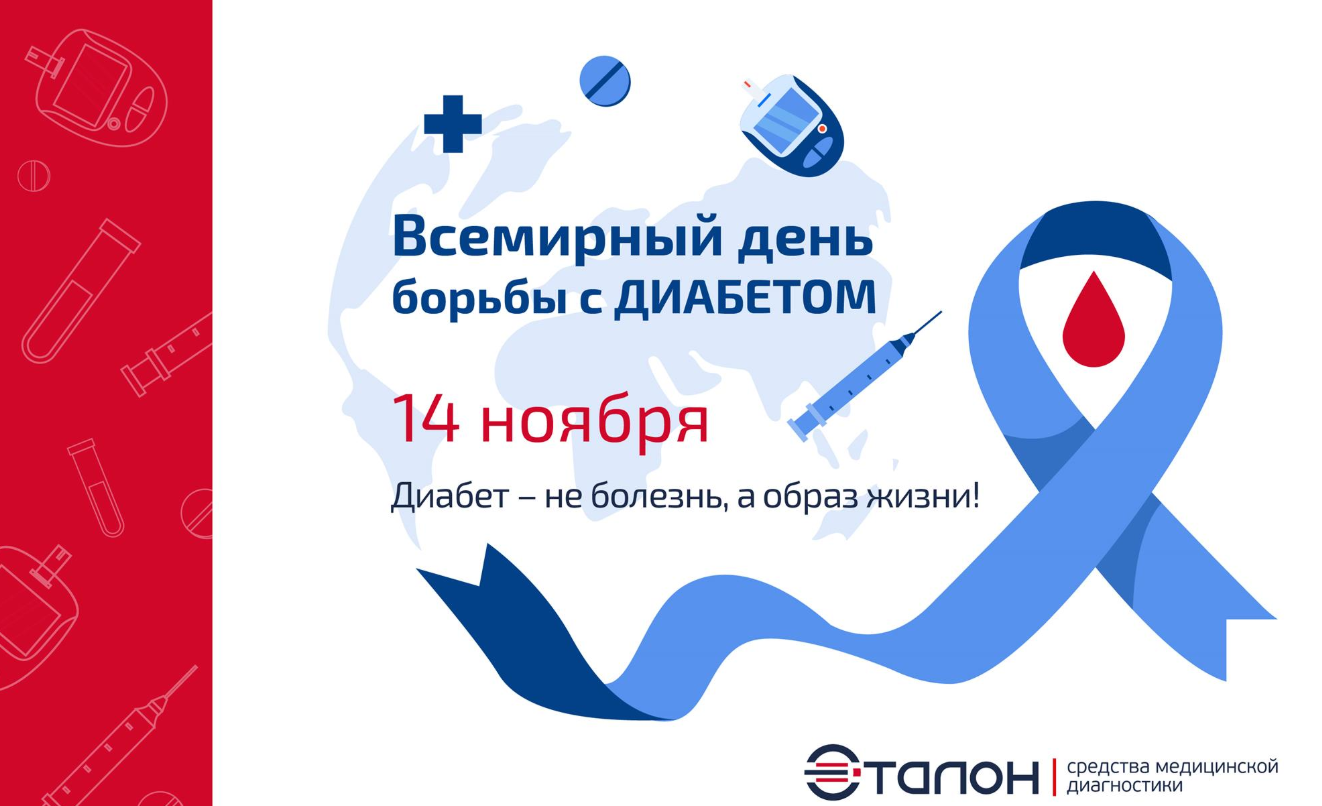
World Diabetes Day is observed around the world every year on 14 November. It was established by the International Diabetes Federation (IDF) and the World Health Organization (WHO) in 1991 in response to growing concern about the rising incidence of diabetes worldwide.
The date was chosen for a reason: Canadian physician and physiologist Frederick Banting was born on this day. Together with John Macleod and Charles Best, he discovered insulin, the hormone that regulates blood sugar levels, for which he was awarded the Nobel Prize.
The logo of World Diabetes Day is a blue circle. In many cultures, the circle symbolizes life and health, while the color blue represents the sky that unites all peoples.
Two main types of diabetes mellitus are currently recognized: type 1 diabetes, which is insulin-dependent and primarily affects young people under 30, and type 2 diabetes, which is non-insulin-dependent. In the latter case, insulin is produced, and by following a diet and maintaining an active lifestyle, it is often possible to keep blood sugar levels within the normal range for a considerable period and successfully avoid complications.
According to the International Diabetes Federation, more than 463 million people worldwide currently live with diabetes. Most of them have type 2 diabetes. At the same time, one in two people with type 2 diabetes is unaware of their condition.
According to Rosstat, approximately 4.8 million people in Russia have diabetes.
The number of new diabetes cases increases by approximately 300,000 every year.
Unfortunately, diabetes mellitus cannot be completely cured; however, it can be controlled, making it possible to live a fulfilling life!
If the risk of developing the disease is identified in time, it may be possible to prevent it. Timely diagnosis is the key to a healthy life!
The following are important reasons to undergo screening: diabetes of any type in close relatives, excess body weight, elevated blood pressure (>140/90 mmHg), high blood cholesterol or triglyceride levels, and symptoms such as chronic fatigue, dry mouth, uncontrollable thirst and others.
In conclusion, we would like to say that World Diabetes Day is, of course, merely an opportunity to reflect—but, as you will agree, it is a significant one!
The date was chosen for a reason: Canadian physician and physiologist Frederick Banting was born on this day. Together with John Macleod and Charles Best, he discovered insulin, the hormone that regulates blood sugar levels, for which he was awarded the Nobel Prize.
The logo of World Diabetes Day is a blue circle. In many cultures, the circle symbolizes life and health, while the color blue represents the sky that unites all peoples.
Two main types of diabetes mellitus are currently recognized: type 1 diabetes, which is insulin-dependent and primarily affects young people under 30, and type 2 diabetes, which is non-insulin-dependent. In the latter case, insulin is produced, and by following a diet and maintaining an active lifestyle, it is often possible to keep blood sugar levels within the normal range for a considerable period and successfully avoid complications.
According to the International Diabetes Federation, more than 463 million people worldwide currently live with diabetes. Most of them have type 2 diabetes. At the same time, one in two people with type 2 diabetes is unaware of their condition.
According to Rosstat, approximately 4.8 million people in Russia have diabetes.
The number of new diabetes cases increases by approximately 300,000 every year.
Unfortunately, diabetes mellitus cannot be completely cured; however, it can be controlled, making it possible to live a fulfilling life!
If the risk of developing the disease is identified in time, it may be possible to prevent it. Timely diagnosis is the key to a healthy life!
The following are important reasons to undergo screening: diabetes of any type in close relatives, excess body weight, elevated blood pressure (>140/90 mmHg), high blood cholesterol or triglyceride levels, and symptoms such as chronic fatigue, dry mouth, uncontrollable thirst and others.
In conclusion, we would like to say that World Diabetes Day is, of course, merely an opportunity to reflect—but, as you will agree, it is a significant one!
