
Scientists at the University of California have developed a method for implanting insulin-producing cells. This discovery could help patients suffering from type 1 and type 2 diabetes.
The new development could significantly improve the lives of people with type 1 diabetes. It is currently still under development and has not yet been tested in humans. If successful, the patients’ immune systems would not reject the beta cells that produce insulin.
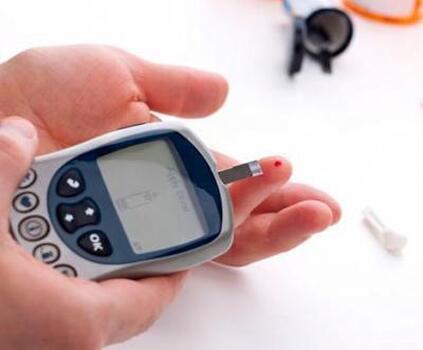
As is known, people with type 1 diabetes need to measure their blood sugar levels regularly throughout the day and administer insulin when the readings are high. Crystal Nyitray, founder and CEO of Encellin, proposed using “living cells” in treatment. During laboratory studies, the test subjects received a semipermeable pouch under the skin, with a membrane that protected the cells from rejection. Based on previous unsuccessful trials, the scientists decided to enclose the living cells in an elastic membrane: insulin and glucose can pass through it, while no adverse immune response is observed. Crystal Nyitray explains this using a simple example: “An elastic membrane is like a mosquito net: it lets fresh air through but prevents insects from entering.”
Crystal Nyitray began developing her theory while she was still a graduate student at the University of California. At that time, she shared the new idea with her academic adviser, bioengineering professor Tejal Desai. Despite her extensive experience in researching and developing synthetic cell coatings, the adviser discouraged the student, as it was extremely difficult to create a membrane in which cells could survive without being rejected by the body’s immune system.
Despite the lack of support, Nyitray continued working in this field. As a result of her experiments, she achieved success and changed her adviser’s mind. Desai noted that she changed her opinion after seeing evidence that the test subject’s body did not reject the elastic membrane containing the living cells.
Based on laboratory experiments involving animals, Nyitray was able to demonstrate that the new method works. She therefore created the innovative Encellin project with the aim of eventually applying the technology in medical practice.
In addition to Nyitray, scientists at ViaCyte in San Diego are working on the theory of “implanting living cells.” Instead of an elastic membrane, the researchers use a porous gel. However, as with Encellin, clinical trials involving patients have not been conducted.
At present, there is still no evidence that Crystal Nyitray’s method will be successful. She is supported by many scientists, including Alice Tomei, director of the Immunology Laboratory at the University of Miami. The new method of treating diabetes can be used only after successful clinical trials involving patients.
The new development could significantly improve the lives of people with type 1 diabetes. It is currently still under development and has not yet been tested in humans. If successful, the patients’ immune systems would not reject the beta cells that produce insulin.
As is known, people with type 1 diabetes need to measure their blood sugar levels regularly throughout the day and administer insulin when the readings are high. Crystal Nyitray, founder and CEO of Encellin, proposed using “living cells” in treatment. During laboratory studies, the test subjects received a semipermeable pouch under the skin, with a membrane that protected the cells from rejection. Based on previous unsuccessful trials, the scientists decided to enclose the living cells in an elastic membrane: insulin and glucose can pass through it, while no adverse immune response is observed. Crystal Nyitray explains this using a simple example: “An elastic membrane is like a mosquito net: it lets fresh air through but prevents insects from entering.”
Crystal Nyitray began developing her theory while she was still a graduate student at the University of California. At that time, she shared the new idea with her academic adviser, bioengineering professor Tejal Desai. Despite her extensive experience in researching and developing synthetic cell coatings, the adviser discouraged the student, as it was extremely difficult to create a membrane in which cells could survive without being rejected by the body’s immune system.
Despite the lack of support, Nyitray continued working in this field. As a result of her experiments, she achieved success and changed her adviser’s mind. Desai noted that she changed her opinion after seeing evidence that the test subject’s body did not reject the elastic membrane containing the living cells.
Based on laboratory experiments involving animals, Nyitray was able to demonstrate that the new method works. She therefore created the innovative Encellin project with the aim of eventually applying the technology in medical practice.
In addition to Nyitray, scientists at ViaCyte in San Diego are working on the theory of “implanting living cells.” Instead of an elastic membrane, the researchers use a porous gel. However, as with Encellin, clinical trials involving patients have not been conducted.
At present, there is still no evidence that Crystal Nyitray’s method will be successful. She is supported by many scientists, including Alice Tomei, director of the Immunology Laboratory at the University of Miami. The new method of treating diabetes can be used only after successful clinical trials involving patients.
