
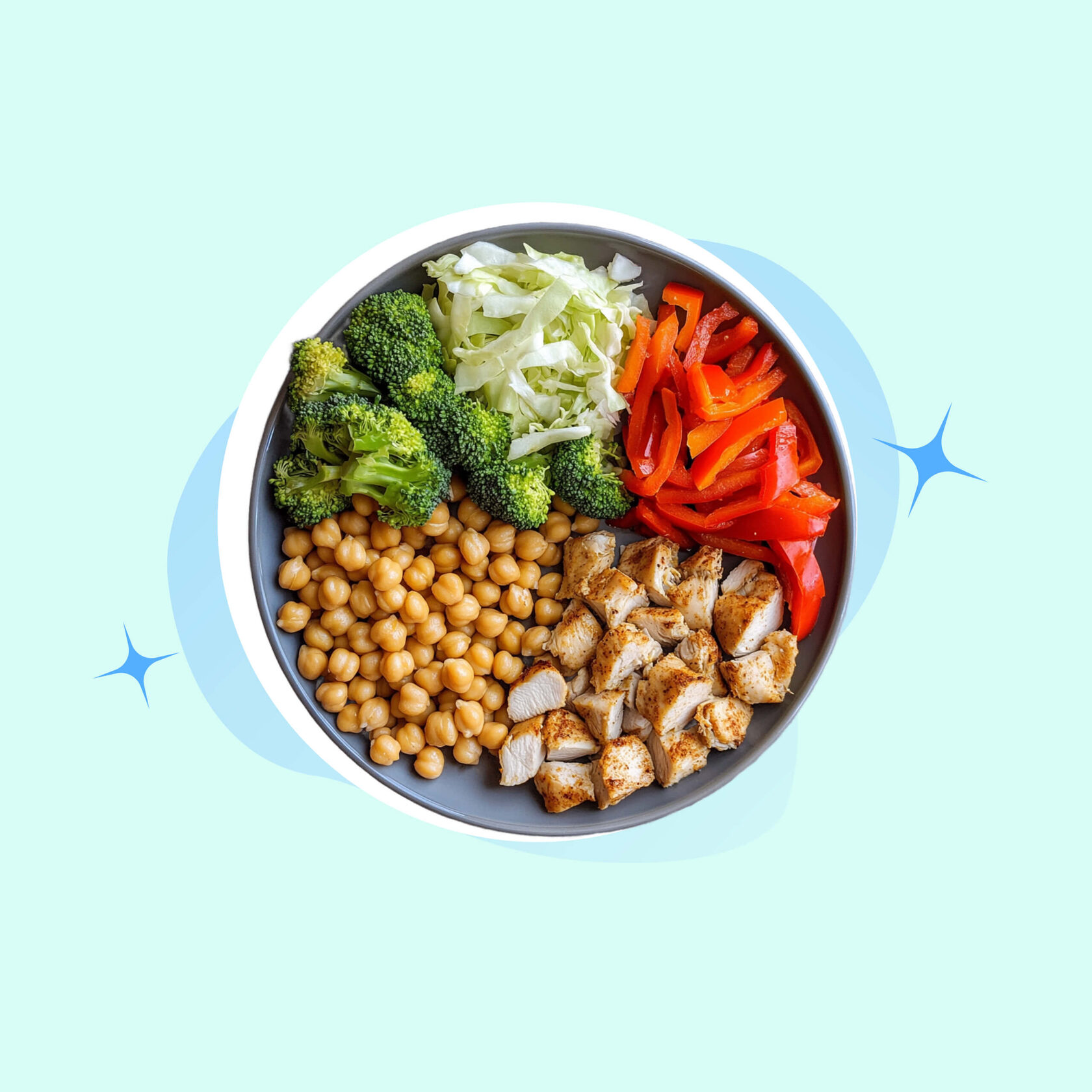
What Is the “Diabetic Plate”
The “diabetic plate” is a simple visual way to assemble a balanced meal that helps keep blood sugar steadier and avoids living in a mode of constant restrictions.
the method is that we focus not on “diet” and “forbidden” foods, but on the
proportions of the plate: how much space is taken up by vegetables, protein,
This approach:
Basic “Diabetic Plate” Scheme
· 1/2 of the plate — non‑starchy vegetables and greens
· 1/4 of the plate — protein source
· 1/4 of the plate — complex carbohydrates (whole grains, starchy vegetables)
· Healthy fats and a sugar‑free drink are added separately
Vegetables: Half the Plate
Suitable options:
· Cucumbers, tomatoes, bell peppers
· Cabbage of all kinds, broccoli, cauliflower
· Zucchini, eggplant, green beans
· Leafy salads, arugula, spinach
· Radish, cucumber, herbs (dill, parsley, cilantro)
Why this matters:
Part of the vegetables can be eaten raw, part can be stewed, baked, or steamed. The key is not to turn everything into mashed potatoes or fried, crispy foods cooked in oil.
Protein: One Quarter of the Plate
Suitable options:
· Poultry: chicken, turkey without skin
· Fish: white and red, preferably baked or boiled
· Lean meat: beef, veal, rabbit
· Eggs (1–2 eggs or an omelet)
· Cottage cheese, plain yogurt without added sugar
· Legumes: beans, chickpeas, lentils, soy, tofu
Why protein is important:
Complex Carbohydrates: One Quarter of the Plate
Suitable options:
· Whole grains: buckwheat, whole oats, pearl barley, brown/wild rice, bulgur, quinoa
· Whole‑grain bread or crispbreads
· Whole‑grain pasta
· Potatoes “in their skins,” sweet potato (yam) — in a small portion
· A piece of whole‑grain tortilla or lavash
Important points:
· Portion size matters: a quarter of the plate of grains is better than a whole “mountain” of porridge.
Healthy Fats and “Foods for Joy”
Good sources:
· Olive, canola, flaxseed oil for dressing salads
· Nuts: almonds, walnuts, hazelnuts (a small handful)
· Seeds: flax, chia, pumpkin, sunflower
· Avocado, olives
“Foods for joy” (a piece of cheese, a spoonful of sauce, a little sugar‑free sweet treat) can be included, but in a small portion and preferably as part of an already balanced meal, not instead of the main course.
Breakfast Examples
1. Oatmeal with Cottage Cheese and Berries
· 1/4 of the plate (or bowl) — oatmeal cooked in water or 1.5–2.5% milk, without added sugar
· 1/4 — 5% cottage cheese or Greek yogurt without added sugar
· 1/2 — sliced cucumber and tomato + greens (as a separate salad plate)
· 1–2 tsp ground flax or chia seeds on top
· A few berries or a slice of apple for flavor
2. Egg Breakfast with Whole‑Grain Bread
· Omelet made from 1–2 eggs with spinach and tomatoes
· Half the plate — salad of cucumber, greens, and bell pepper with olive oil
· Quarter of the plate — whole‑grain bread or toast
· Drink: tea or coffee without sugar, optionally with a small amount of milk
3. Sugar‑Free Cottage Cheese Casserole
· A portion of low‑fat cottage cheese casserole with added apple and cinnamon
· Half the plate — fresh vegetables (carrot sticks, cucumber, tomato)
· A few nuts or a spoonful of seeds for healthy fats
Lunch Examples
1. “Classic Diabetic Plate”
· 1/2 of the plate — salad of cabbage, cucumber, tomato, and greens with olive oil
· 1/4 — baked chicken fillet or turkey
· 1/4 — buckwheat or brown rice
· Drink: water or herbal tea without sugar
2. Vegetable Soup + Protein and Grains
· A bowl of vegetable soup made from broccoli, cauliflower, and carrots in a light chicken or vegetable broth
· On a second plate: 1/2 — fresh vegetables, 1/4 — baked fish, 1/4 — pearl barley or bulgur
· A slice of whole‑grain bread if needed
3. Salad Bowl with Chickpeas
· A large salad bowl: leafy greens, cucumbers, tomatoes, bell pepper, herbs (this is your “half plate”)
· 1/4 — boiled chickpeas or beans
· 1/4 — boiled quinoa or buckwheat
· Dressing: olive oil, lemon juice, a few spices
Dinner Examples
1. Fish with Vegetables
· 1/2 of the plate — steamed or baked vegetables: broccoli, cauliflower, zucchini
· 1/4 — baked or stewed fish (salmon, cod, hake)
· 1/4 — a small portion of potatoes “in their skins” or cauliflower as a side dish if a lighter option is needed
· A little olive oil or a slice of avocado
2. Lazy Cabbage Rolls
· Baked or stewed lazy cabbage rolls made from cabbage, turkey/beef mince, and a small amount of rice
· An additional half plate — salad of fresh cabbage, cucumbers, and greens
· Drink: tea without sugar
3. Warm Vegetable Salad with Chicken
· 1/2 of the plate — stewed vegetables (zucchini, eggplant, bell pepper, carrot)
· 1/4 — slices of baked chicken breast or turkey
· 1/4 — a little quinoa or whole‑wheat couscous
· Tea or water with lemon
How to Adapt the Plate to Your Needs
The “diabetic plate” method provides a framework, but there is plenty of room for variation within it.
What you can vary:
· Type of protein: meat, fish, eggs, dairy products, or legumes
· Sources of carbohydrates: different grains, whole‑grain bread, potatoes, sweet potatoes
· Combinations of vegetables by season and taste
· Calorie level — by adjusting the amount of fats and side dishes
What is important to maintain:
· Half the plate — vegetables
· Presence of protein at every meal
· Preference for complex carbohydrates
· Minimal added sugar and sugary drinks
No Strict Bans — But With Awareness
Living with diabetes does not mean eating blandly and following a strict “diet number…” for life.
The plate method helps you assemble tasty breakfasts, lunches, and dinners without rigid restrictions, but with a clear understanding of balance: more vegetables and protein, smart carbohydrates, healthy fats, and small pleasures integrated into the overall system.
